AI Agent Code Review: Who Verifies What Agents Write?
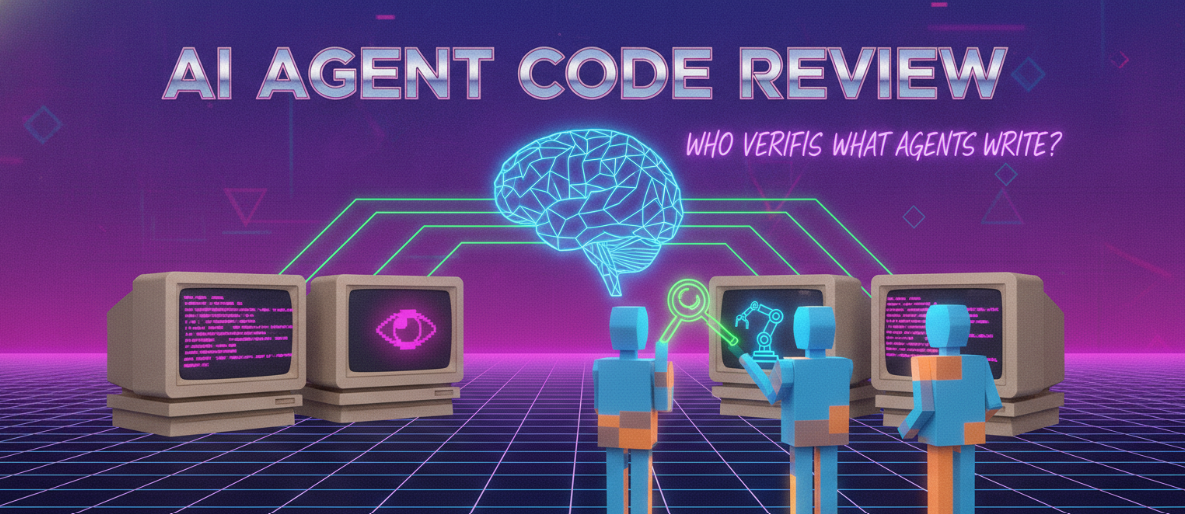
AI agents now write code faster than any team can read it. Cursor, GitHub Copilot and Claude Code open pull requests in minutes, and the output usually looks clean. But clean-looking code is not correct code. That raises the question every engineering team now faces: who is doing AI agent code review, and who verifies what these agents write? This guide gives you a simple three-layer verification model and a 5-point checklist you can use on your next pull request.
Why AI Agent Code Needs Review
AI agent code needs review because it often looks correct while being wrong. Agents produce clean, well-formatted code that can still call APIs that don’t exist, skip edge cases or miss the real requirement. The trust gap is measurable: in Sonar’s survey, 96% of developers don’t fully trust AI-generated code, yet only 48% always verify it before committing. Speed makes it worse, because the more code agents write, the more unchecked changes reach production. Without a clear review process, nobody owns the risk. Review is no longer optional.
Who Verifies AI-Generated Code?
AI-generated code should be verified in three layers: the developer who owns the change, automated checks that run first, and a separate reviewer who signs off. No single layer is enough, and the agent that wrote the code should never be its only judge.
- The developer owns it. Whoever prompts the agent is the author. Read the diff, run the code and be able to explain every change.
- Automated checks run first. Tests, linters, static analysis and security scanning in CI catch many issues before a human looks. These checks are deterministic, so they don’t share the agent’s blind spots.
- A separate reviewer signs off. This can be a teammate or an independent review tool, but not the same agent that wrote the code. Self-review shares the original blind spots, so it catches surface issues and misses wrong assumptions.
This layered, human-in-the-loop code review is especially important in AI in FinTech, where verifying AI-generated code helps protect sensitive financial data, maintain regulatory compliance, and ensure system reliability.
A 5-Point Checklist to Review AI-Generated Code
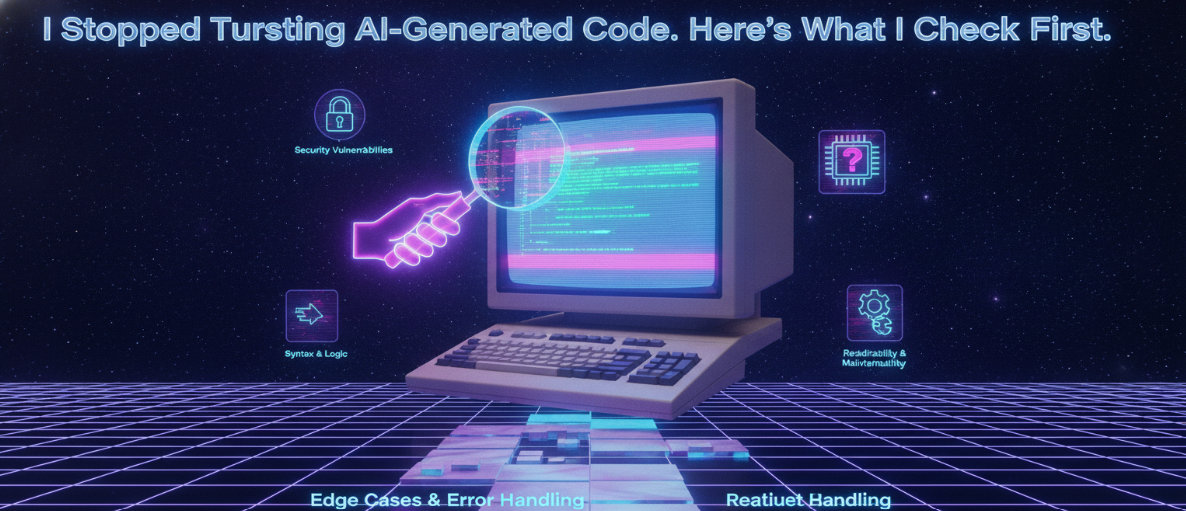
To review AI-generated code, check five things in every pull request: requirements, real APIs, edge cases, security and test quality. Use this list on each agent-written change.
- Does it match the requirement? Compare the code with what was actually asked. Agents often solve a nearby problem, so confirm the behavior, not just the syntax.
- Are the APIs and imports real? Agents can invent functions, packages or parameters. Check every unfamiliar import against the official docs.
- Are edge cases and errors handled? Look for empty inputs, null values, timeouts and failed network calls. Clean “happy path” code is a common warning sign.
- Is it secure? Check input validation, hardcoded secrets, authentication checks and new dependencies. Run security scanning in CI as well, not only a manual read.
- Do the tests prove something? Passing tests mean little if the agent wrote weak ones. Confirm they would fail if the code were broken.
If any item fails, send the change back before it merges. A consistent AI agent code review checklist makes this process faster and more reliable, especially when learning how to build a SaaS product that requires secure, scalable, and maintainable code.
Human in the Loop: Where Agents Need Limits
Agents should work freely on low-risk tasks and need human approval for high-risk ones. A simple rule works well: the more damage a mistake could cause, the more human review it needs.
Agents can handle with automated checks: boilerplate, documentation, formatting and tests for existing code, as long as CI passes.
Always needs a human: authentication, payments, database migrations, security-sensitive code, infrastructure changes and anything that touches customer data.
Write these limits into your team’s contribution rules and require approval before merging. This is especially important when working with AI systems like those explained in What Is Retrieval-Augmented Generation (RAG)?, where changes to data retrieval, access controls, and response generation require careful human review to maintain accuracy and security.
Conclusion
AI agents write code fast, but speed is not safety. Effective AI agent code review means three layers (the developer, automated checks and an independent reviewer), a clear checklist and firm human limits on risky changes. Agents write the code, and developers own the risk.
What does your team do to verify agent-written code? Share it in the comments.
Need help building a safe review process for AI-generated code? Synfinity Dynamics helps teams ship AI-assisted software with confidence.
About the author
- At Synfinity Dynamics, we help businesses unlock growth with secure fintech development, high-performance web & mobile apps, and scalable digital solutions built for the future.
Comments
Join the discussionNo comments yet. Be the first to comment.