Why QA Testing Is Important for AI-Generated Code
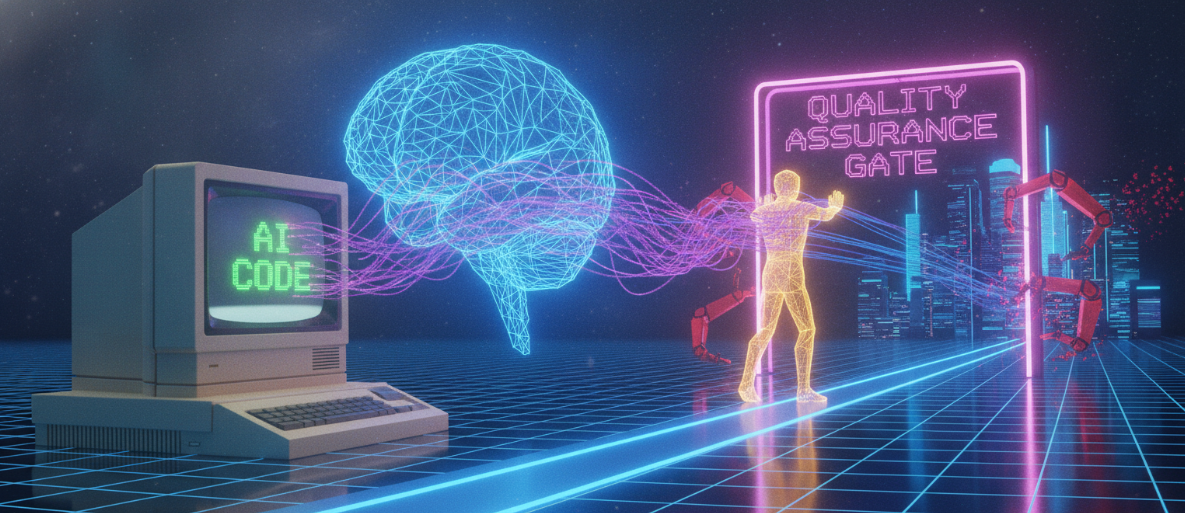
AI coding tools are transforming software development by helping developers generate code, fix issues, and build application components faster. However, faster development does not always guarantee better software quality. AI-generated code can still include logical errors, security vulnerabilities, performance limitations, or solutions that do not fully match business requirements.
This makes AI-generated code testing an essential part of modern development workflows. QA helps teams validate AI-created code for reliability, security, and real-world performance, allowing organizations to combine AI-driven productivity with the quality standards required for dependable software.
Why AI-Generated Code Still Requires QA Testing
AI coding assistants can generate functional code within seconds, but generating code is only one part of software development. The biggest challenge is ensuring that the code works correctly in real-world situations. AI models learn from existing patterns, but they do not fully understand a company’s business rules, user behavior, security requirements, or long-term application goals.
This is where AI-generated code testing becomes essential. QA teams help identify issues that may not be visible during initial development, such as incorrect logic, missing edge cases, performance limitations, or compatibility problems with existing systems.
A proper testing process ensures that AI-generated code meets the same quality standards as traditionally developed software. By combining AI development speed with structured QA practices, teams can build applications faster without compromising reliability, security, or user experience.
Common AI Coding Risks That QA Teams Need to Identify
AI-generated code can accelerate development, but it also introduces new challenges that teams need to evaluate before deployment. Since AI tools generate responses based on learned patterns rather than complete project understanding, the output may require careful validation.
Some common AI coding risks include:
Logic and Functional Errors: AI may generate code that looks correct but fails in specific business scenarios or edge cases.
Security Vulnerabilities: Generated code may include unsafe practices, outdated dependencies, or missing security checks.
Poor Code Maintainability: Quickly generated solutions may not always follow the project’s architecture, coding standards, or long-term maintenance requirements.
Integration Issues: AI-generated components may create compatibility problems when connected with existing systems, APIs, or databases.
Performance Problems: Code that works during testing may not handle high traffic, large datasets, or complex user interactions efficiently.
Identifying these risks through proper testing and review helps maintain AI-generated code quality and ensures that faster development does not compromise software reliability. This becomes especially important as modern teams compare approaches like Vibe Coding vs Traditional Programming vs AI-Assisted Development, where speed, human expertise, and quality assurance must work together to build dependable software.
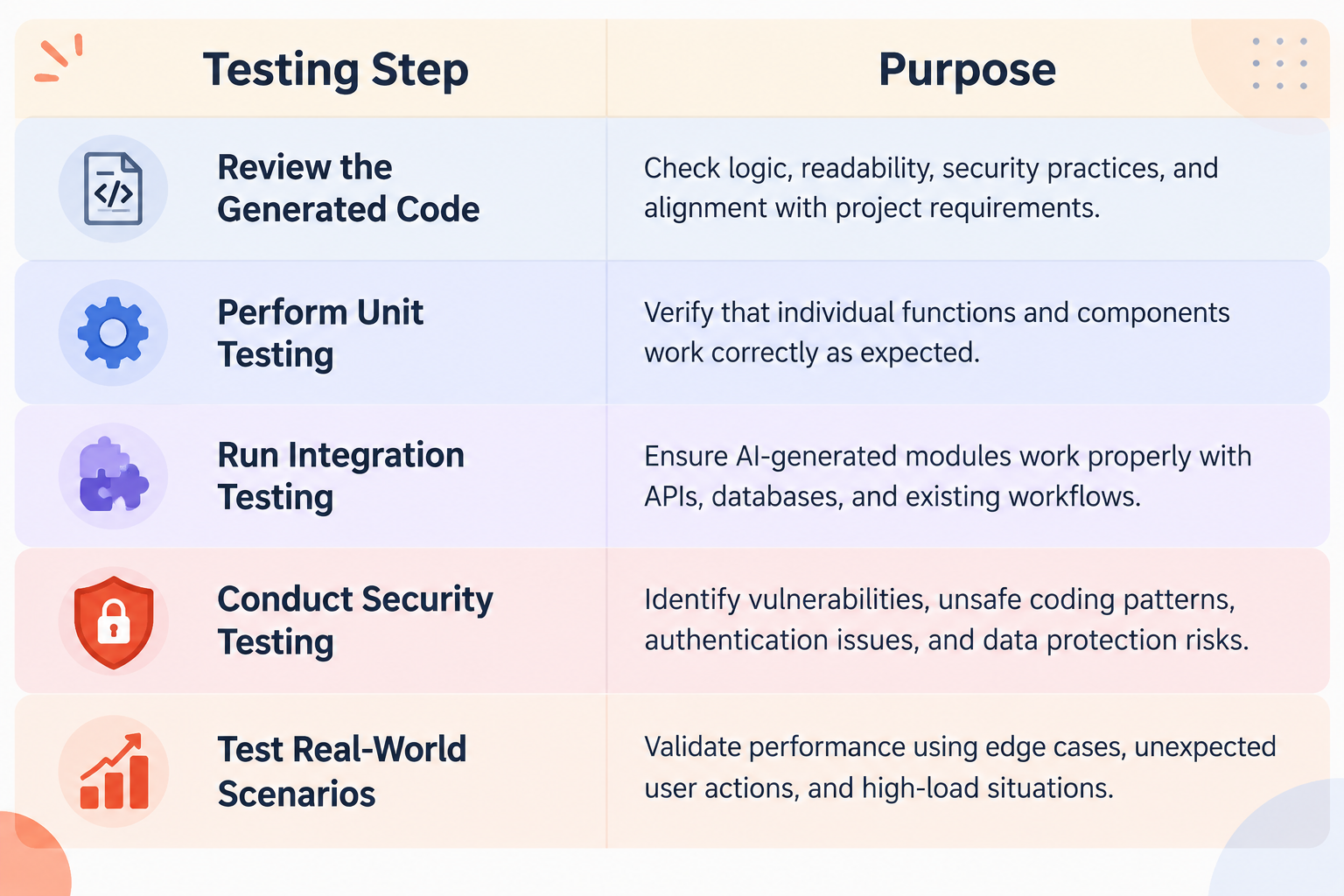
How to Test AI-Generated Code Before Production
Testing AI-generated code requires a structured approach to ensure applications are secure, reliable, and ready for real-world usage. Teams should evaluate code quality, functionality, security, and performance instead of only checking whether the code runs successfully.
The Role of QA in AI-Assisted Software Development
AI-assisted software development helps teams accelerate coding, automate repetitive tasks, and improve developer productivity. However, QA plays an essential role in ensuring that AI-generated solutions meet real-world requirements, security standards, and performance expectations.
QA teams add human validation by reviewing AI-generated outputs, identifying potential issues, and testing application behavior across different scenarios. By combining AI capabilities with structured quality assurance practices, organizations can build software faster while maintaining reliability and user confidence.
Best Practices for Maintaining AI-Generated Code Quality
Maintaining AI-generated code quality requires proper review and testing to ensure software remains secure, reliable, and easy to maintain.
Key practices include:
Review AI-Generated Code: Check logic, security, and project alignment.
Use Automated Testing: Detect bugs and maintain application stability.
Follow Coding Standards: Keep code structured and maintainable.
Validate Security: Identify vulnerabilities and unsafe practices.
Monitor Performance: Track real-world application behavior.
Combining AI speed with strong QA practices helps teams build reliable software faster while maintaining quality standards. As artificial intelligence continues to reshape industries, businesses and employees must understand how to adapt to these changes, making topics like AI and the Future of Work: How Businesses and Employees Can Prepare for the Shift increasingly important for modern organizations.
How QA and AI Can Work Together for Better Software Development
The future of software development is not about choosing between AI tools and quality assurance. Instead, successful teams will combine both to create a faster and more reliable development workflow. AI can assist developers by generating code, suggesting improvements, and reducing repetitive tasks, while QA ensures that the final output meets quality expectations.
A collaborative approach helps teams:
Identify bugs earlier in the development cycle
Improve testing efficiency through automation
Validate AI-generated solutions against real business requirements
Maintain better security and performance standards
Deliver reliable applications faster
As AI continues to become a larger part of software engineering, testing practices will also evolve. Teams that integrate AI-generated code testing into their workflow can take advantage of AI-driven productivity while maintaining the reliability users expect from modern applications.
Conclusion
AI-generated code is transforming software development by helping teams build applications faster, but quality remains a critical factor. Without proper testing, AI-generated solutions may introduce hidden bugs, security risks, or performance issues that can impact the final product.
By implementing AI-generated code testing practices, teams can ensure that AI-assisted development delivers reliable, secure, and production-ready software. The combination of artificial intelligence and effective QA processes allows organizations to improve development speed while maintaining the quality standards users expect.
📚 Related Reading
How to Rank in ChatGPT, Gemini, and Perplexity AI Search Results
AI vs Traditional Website Development: Which Is Better in 2026?
Autonomous AI Agents: Architecture, Use Cases and How They Work